



Stablecoins Explained: The Complete Guide to USDT, USDC & Crypto Gambling in 2025
Imagine playing at a crypto casino, winning big, and watching your balance plummet 15% overnight because Bitcoin crashed, even though you never lost a single bet. Sounds like a pain. Well, that's the problem stablecoins were designed to solve.
In 2025, stablecoins now handle approximately 90% of crypto gambling deposits, with USDT and USDC dominating the scene. But what exactly are stablecoins, how do they maintain their value, and why have they become the preferred currency for crypto casinos worldwide?
In this comprehensive guide, we'll break down everything you need to know about stablecoins, from how USDT and USDC work, to which ones crypto casinos accept, and why they've revolutionized online gambling. Whether you're new to crypto or a seasoned trader, this guide will help you understand why stablecoins are taking over the digital economy.
What Are Stablecoins?
Stablecoins are cryptocurrencies designed to maintain a stable value by pegging their price to an external reference asset, typically a fiat currency like the US dollar, the euro, or commodities like gold.
Unlike Bitcoin or Ethereum, which can experience significant price fluctuations, stablecoins aim to maintain a consistent 1:1 ratio with their pegged asset. This means that one unit of a dollar-pegged stablecoin should always be worth approximately $1.
Why Were Stablecoins Created?
Cryptocurrencies are known for their volatility and can fluctuate rapidly in value. This makes it challenging to use them as a store of value or a medium of exchange. Stablecoins were created to solve this problem by offering price stability.
The Problem They Solve:
- Volatility: Bitcoin can swing 10-20% in a single day
- Usability: Hard to price goods/services in constantly changing currencies
- Trust: Merchants and consumers need predictable value
- Speed: Faster than traditional banking, but stable unlike crypto
The Solution: Stablecoins bridge the gap between traditional finance and cryptocurrency, offering:
- The speed and efficiency of blockchain technology
- The stability of fiat currencies
- Low transaction fees
- 24/7 availability
- Global accessibility
The Big Three: Types of Stablecoins
There are three main types of stablecoins: fiat-collateralized, crypto-collateralized, and algorithmic. Each maintains its peg through different mechanisms.
1. Fiat-Collateralized Stablecoins (Most Common)
How They Work: Fiat-backed stablecoins are backed by fiat currency reserves held in a bank account. The amount of underlying fiat currency held in reserves should be equal to the number of stablecoins in circulation so that the stablecoin is fully collateralized.
Examples: USDT (Tether), USDC (USD Coin), BUSD, TUSD, PYUSD
Pros:
- Simple to understand
- Most stable mechanism
- Backed by real-world assets
- High liquidity
Cons:
- Centralized (requires trust in the issuing company)
- Requires regular audits to verify reserves
- Susceptible to regulatory pressure
- Must hold assets with traditional financial institutions
2. Crypto-Collateralized Stablecoins
How They Work: Crypto-backed stablecoins don't rely on banks, they use other crypto as collateral, locked inside smart contracts. You deposit your crypto, and in return you mint stablecoins. But there's a catch: you usually have to over-collateralize, for example, lock up $150 of ETH to get $100 of stablecoins.
Examples: DAI, sUSD, LUSD
Pros:
- Decentralized (no single point of failure)
- Transparent (all on blockchain)
- No need for traditional banks
- Fully auditable
Cons:
- Capital inefficient (need more collateral than stablecoins issued)
- Complex mechanisms
- Can depeg during extreme market volatility
- Auto-liquidation risk if collateral value drops
3. Algorithmic Stablecoins
How They Work: Algorithmic stablecoins maintain their dollar peg through smart contracts that automatically adjust token supply. When prices rise, they create more tokens; when prices fall, they burn them.
Examples: FRAX (partially algorithmic), formerly TerraUSD (UST - collapsed in 2022)
Pros:
- No collateral needed
- Fully decentralized
- Capital efficient
- Scalable
Cons:
- Extremely risky (TerraUST's $40 billion collapse proved this)
- Relies entirely on market confidence
- Can spiral into "death spirals" where losing confidence causes collapse
- Regulatory uncertainty
Warning: After the Terra/Luna collapse in May 2022, most experts recommend avoiding pure algorithmic stablecoins.
USDT (Tether): The Market Leader
What Is USDT?
Tether (USDT) is the world's largest and oldest stablecoin, launched in 2014. It's a fiat-collateralized stablecoin pegged 1:1 to the US dollar, meaning each USDT token is supposed to be backed by one US dollar (or equivalent assets) held in reserve.
Key Stats:
- Market Cap: Over $143 billion (as of 2025)
- Daily Trading Volume: Consistently the highest among all cryptocurrencies
- Blockchains: Available on Ethereum (ERC-20), Tron (TRC-20), Solana, BSC, Avalanche, Polygon, and more
- Market Dominance: Tether controls over 80% of trading on centralized exchanges
How USDT Maintains Its Peg
Tether maintains its $1 peg through:
- Reserve Backing: Claims to hold equivalent value in cash and cash-equivalent assets
- Market Arbitrage: Traders buy/sell USDT to profit from price differences, naturally stabilizing price
- Redemption Mechanism: Authorized partners can redeem USDT for dollars (though not available to regular users)
Reserve Composition: According to Tether's attestations, reserves include:
- US Treasury Bills (majority)
- Cash and cash equivalents
- Corporate bonds
- Secured loans
- Other investments
The Controversy: Transparency Issues
USDT has faced significant scrutiny over its reserve backing:
In the past, Tether was fined for misleading users about its reserves. While Tether claimed to have '100% reserves at all times', an investigation found that Tether only held 27.6% of the value of its stablecoin in reserves.
Key Concerns:
- Lack of Full Audits: Tether provides "attestations" but not full audits from Big Four accounting firms
- Reserve Opacity: Doesn't publish real-time proof of reserves
- Regulatory Issues: Paid $41 million fine to CFTC in 2021 for misleading statements
- Geographic Concerns: Heavy usage in regions with less regulatory oversight
Despite Controversies: Nevertheless, USDT remains the most widely used stablecoin globally, partly owing to its status as one of the earliest stablecoins introduced.
Where USDT Dominates
Most of the trade volume in USDT is conducted in Asia and Europe, where it's become the de facto "digital dollar" for:
- Cryptocurrency trading
- Cross-border remittances
- Store of value in countries with weak currencies
- Crypto gambling (more on this below)
USDC (USD Coin): The Transparent Alternative
What Is USDC?
USD Coin (USDC) is a fully-regulated, fiat-collateralized stablecoin introduced in 2018 by Circle. Managed by the Centre consortium (Circle and Coinbase), USDC is recognized for its transparency and adherence to regulatory standards, offering monthly audits of its reserve assets.
Key Stats:
- Market Cap: Over $34.85 billion as of 2024
- Transaction Volume: USDC has grown rapidly, with over $17 trillion in on-chain transactions
- Milestone: USDC overtook USDT in transaction volume in 2024
- Blockchains: Natively supported on 28+ blockchain networks including Ethereum, Solana, Polygon, Arbitrum, Base, and more
How USDC Maintains Its Peg
USDC uses a similar but more transparent mechanism than USDT:
USDC is backed 100% by highly liquid cash and cash-equivalent assets and is always redeemable 1:1 for US dollars.
Reserve Structure: The majority of the USDC reserve is invested in the Circle Reserve Fund (USDXX), an SEC-registered 2a-7 government money market fund. Daily, independent, third-party reporting on the portfolio is publicly available via BlackRock.
What's In The Reserves:
- US Treasury securities (short-term)
- Cash held at regulated financial institutions
- Overnight US Treasury repurchase agreements
Transparency: Circle publishes monthly reserve attestations by a Big Four accounting firm, providing significantly more transparency than USDT.
Regulatory Compliance
USDC is designed with compliance in mind. Circle works closely with regulators and financial institutions to ensure the stablecoin adheres to all relevant regulations.
Regulatory Advantages:
- Registered as a money transmitter in most US states
- Complies with AML/KYC regulations
- In April 2025, the staff of the U.S. Securities and Exchange Commission (SEC) issued a Statement on Stablecoins which confirmed that USDC is a "Covered Stablecoin" and does not constitute the offer and sale of securities
- Fully audited reserves
USDC vs USDT: The Key Differences
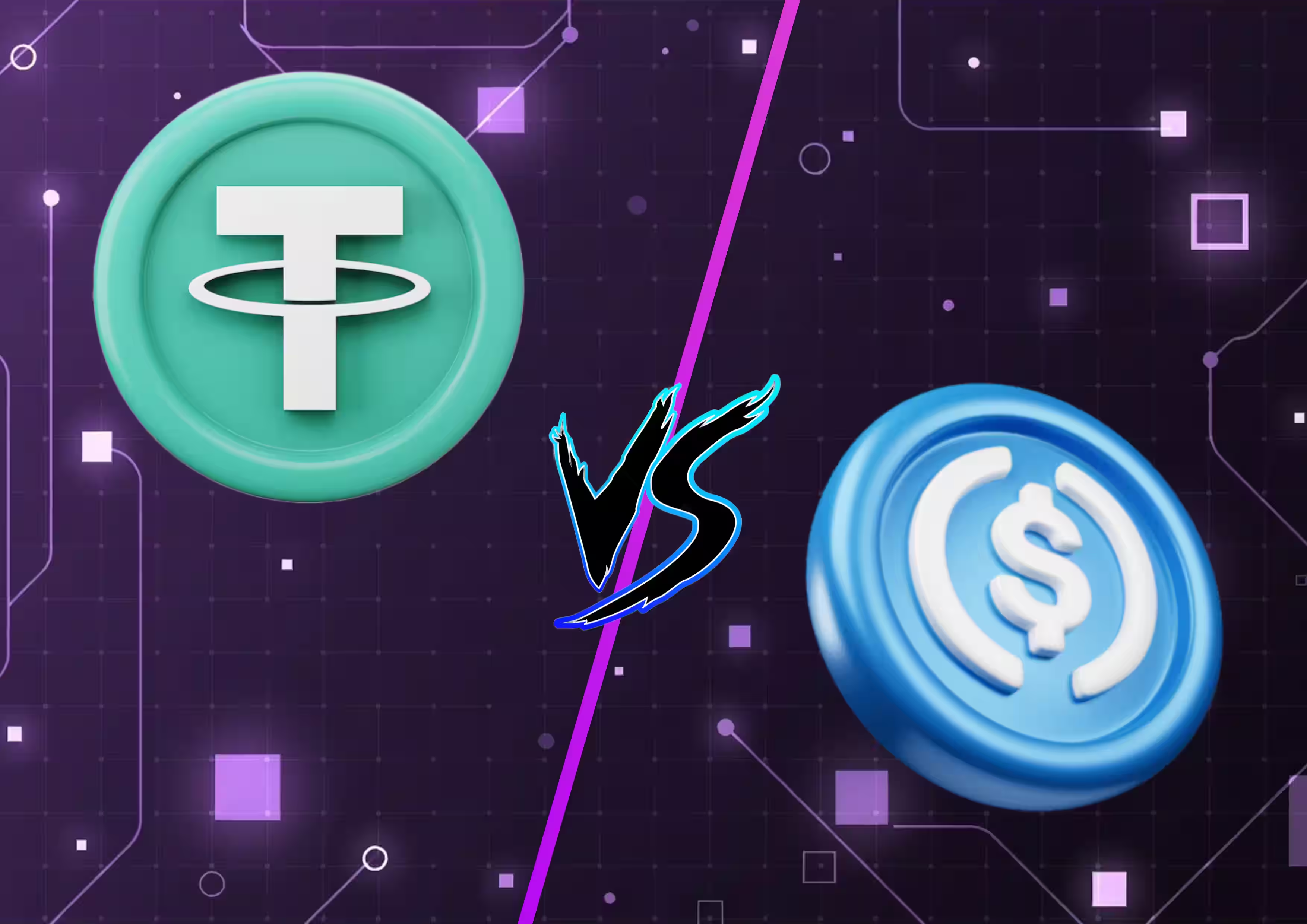
USDT has a longer track record and larger market share, but has faced questions around transparency and regulation. USDC is often viewed as the safer and more transparent option, thanks to regular audits and simpler reserve structures.
Where USDC Dominates: USDC sees most of its trade activity in North America, particularly among:
- US-based traders and institutions
- Regulated DeFi protocols
- Compliance-focused businesses
- Institutional investors
Other Notable Stablecoins
DAI (Decentralized)
Type: Crypto-collateralized Issuer: MakerDAO (decentralized) Peg: 1 DAI = $1 USD Market Cap: ~$5-6 billion
What Makes It Unique: DAI is the leading decentralized stablecoin, backed by crypto assets (primarily ETH) locked in smart contracts. It's over-collateralized to maintain stability during market volatility.
Pros:
- Fully decentralized
- Transparent (all on-chain)
- No single point of failure
- Censorship-resistant
Cons:
- More complex than fiat-backed stablecoins
- Can depeg during extreme volatility
- Capital inefficient (requires over-collateralization)
BUSD (Binance USD) - Discontinued
Status: Being phased out as of February 2024
BUSD was a fiat-backed stablecoin issued by Paxos and backed by Binance. After regulatory pressure from the New York Department of Financial Services, Paxos stopped minting new BUSD in February 2023, and Binance is phasing it out in favor of other stablecoins.
PYUSD (PayPal USD)
Launched: August 2023 Type: Fiat-collateralized Issuer: PayPal (via Paxos) Market Cap: Growing but still small compared to USDT/USDC
PYUSD is tied to PayPal, meaning it is structured to comply with U.S. and international financial regulations. Being tied to PayPal means players who might hesitate with other cryptocurrencies often trust PYUSD, making it easier to adopt.
Gambling Industry Potential: Many casinos already integrate PayPal for fiat payments. Adding PYUSD could be a seamless upgrade rather than a complicated overhaul.
TUSD (TrueUSD)
Type: Fiat-collateralized Issuer: Archblock (formerly TrustToken) Market Cap: ~$500 million
TrueUSD is a fully-backed stablecoin with regular third-party attestations. It's similar to USDC but with smaller market share.
USDD (Decentralized USD)
Type: Algorithmic/hybrid Issuer: TRON DAO Market Cap: Variable
USDD is TRON's algorithmic stablecoin, backed by a mix of crypto assets. It's maintained through algorithmic mechanisms and collateral reserves.
How Stablecoins Are Pegged: The Mechanics
Fiat-Backed Pegging Mechanism
For USDT and USDC, the 1:1 peg is maintained through:
1. Reserve Holdings Each token is issued to represent one U.S. dollar held in reserves. One USDT or one USDC in your wallet should always be close to the value of one dollar in the real world.
2. Redemption Arbitrage When USDT/USDC trades above $1:
- Authorized participants mint new tokens by depositing $1
- They sell tokens at premium (e.g., $1.01)
- Increased supply pushes price back to $1
When USDT/USDC trades below $1:
- Traders buy tokens at discount (e.g., $0.99)
- Redeem them for $1 from issuer
- Decreased supply pushes price back to $1
3. Market Confidence The peg holds as long as:
- Reserves are fully backed
- Issuers remain solvent
- Redemption mechanism functions properly
- Regulatory compliance is maintained
Crypto-Backed Pegging (DAI Example)
DAI maintains its peg through:
1. Over-Collateralization
- Users deposit $150 of ETH to mint $100 DAI
- This buffer protects against crypto price drops
2. Liquidation Mechanism
- If collateral value drops too much, smart contracts auto-sell assets
- This prevents under-collateralization
3. Stability Fees
- Interest rates adjust to manage supply/demand
- High fees reduce DAI supply, pushing price up
- Low fees increase supply, pushing price down
De-Pegging Events: What Happens When Stablecoins Fail?
Both USDC and USDT have had incidents where the price dropped below the price of $1. However, all of these 'de-pegging incidents' were brief and the price returned to $1 shortly after.
Notable De-Pegging Events
USDC - Silicon Valley Bank Crisis (March 2023)
- What Happened: Circle revealed $3.3 billion of USDC reserves were held at Silicon Valley Bank when it collapsed
- Impact: USDC briefly fell to $0.87
- Recovery: Peg restored within 48 hours after US government guaranteed SVB deposits
- Market Cap Impact: Between 2022-2023, USDC market capitalization declined by almost 50% as investors lost trust
USDT - Various Incidents (2017-Present)
- Multiple brief de-pegs to $0.96-$0.99
- Usually recovers within hours
- Typically caused by:
- FUD about reserves
- Regulatory concerns
- Exchange liquidity issues
- Market panic
TerraUSD (UST) - Complete Collapse (May 2022)
- Algorithmic stablecoins are the high-wire performers without a safety net. TerraUSD's spectacular $40 billion crash in May 2022 proved just how risky this approach can be
- Fell from $1 to $0.10 in days
- Never recovered
- Wiped out ~$40 billion in value
Why De-Pegging Happens
Common Causes:
- Loss of Confidence: Doubts about reserve backing
- Bank Failures: Reserves held at failing institutions
- Liquidity Crises: Not enough buyers at $1
- Regulatory Actions: Sudden restrictions or investigations
- Technical Failures: Smart contract bugs (for algorithmic coins)
- Market Panic: Self-fulfilling prophecies
Stablecoins in Crypto Gambling: Why They Dominate
The Gambling Industry Transformation
Bitcoin opened crypto gambling, but stablecoins took over. USDT and USDC now handle 90% of deposits thanks to zero volatility, fast settlement, and predictable fees, letting bettors track profit without checking price charts.
Why Gamblers Prefer Stablecoins
1. No Volatility Risk
Traditional Problem:
- Deposit 0.01 BTC ($400) when Bitcoin is $40,000
- Win 0.005 BTC (bringing balance to 0.015 BTC)
- Bitcoin crashes 20% overnight
- Your 0.015 BTC is now worth only $480 (not $600)
- You "won" but lost money
Stablecoin Solution: You deposit the BTC equivalent of $100. With stablecoins, your balance stays at approximately $100 regardless of market conditions, making it easier to track your gambling budget and winnings.
2. Fast Transactions
Instead of waiting days for an international wire transfer, you can send USDT or USDC in minutes. The recipient sees the same value you sent, without losing out as a result of price fluctuations.
Network Speed Comparison:
- Tron (TRC-20 USDT): ~3 seconds, virtually free fees
- Ethereum (ERC-20): ~15 seconds, higher gas fees
- Solana: Under 1 second, fractions of a cent
- BSC (BEP-20): ~3 seconds, pennies in fees
3. Lower Fees
Stablecoin transfers usually cost much less than credit cards or bank wires, saving players money on deposits and withdrawals.
Fee Comparison:
- Credit Card: 3-5% + currency conversion fees
- Bank Wire: $25-50 per transfer
- Bitcoin: $1-5 (varies with network congestion)
- USDT on Tron: $0.10-1.00
- USDC on Solana: $0.001-0.01
4. Privacy & Control
You get the benefits of crypto (non-banking methods, fewer restrictions) without the volatility.
- No bank statements showing gambling transactions
- No credit card declines from anti-gambling policies
- Your keys, your coins. Complete control
- Pseudonymous (not fully anonymous, but more private than traditional banking)
Which Stablecoins Do Crypto Casinos Accept?
The most widely accepted stablecoins are USDT (Tether) and USDC (USD Coin), with many platforms also supporting DAI, BUSD (being phased out), and TUSD (TrueUSD).
Most Common:
- USDT - Accepted at 95%+ of crypto casinos
- USDC - Accepted at 85%+ of crypto casinos
- DAI - Accepted at 60%+ of crypto casinos
- BUSD - Being phased out
- TUSD - Accepted at 30-40% of crypto casinos
Network Preferences:
- Tron (TRC-20): Most popular for USDT due to low fees
- Ethereum (ERC-20): Standard but higher fees
- Binance Smart Chain (BEP-20): Good balance of speed and cost
- Solana: Growing rapidly, extremely fast and cheap
Top Stablecoin Casinos in 2025
The best stablecoin (USDT, USDC, DAI) casinos are Instaspin, Wreckbet, Golden Panda, CoinPoker, Lucky Block, Mega Dice, WSM Casino, TheHighRoller Casino, Instant Casino, Betpanda, CoinCasino, Cryptorino, Betplay, and BC.Game.
What Makes Them Stand Out:
- Massive game libraries (6,000-11,000+ games)
- Multiple stablecoin support
- Fast withdrawals (often under 30 minutes)
- Low/no KYC requirements for crypto players
- Generous welcome bonuses
- Provably fair games
Popular Choices:
- Stake.com - Industry leader, accepts USDT, USDC, DAI
- BC.Game - 10,000+ games, extensive stablecoin support
- 1Win - Our partner! Accepts USDT, USDC, and more
- Rollbit - Fast payouts, VIP program
- Betpanda - No KYC, clean interface
The Business Case for Casinos
Why Casinos Love Stablecoins:
Compliance and transparency: Serious issuers publish reserve reports and work with regulators; that makes it simpler to integrate stablecoins into licensed environments than exotic tokens that have no clear backing.
Additional Benefits:
- Lower Processing Costs: Save 50-90% vs credit cards
- Instant Settlement: No waiting for bank clearing
- Global Reach: Accept players from anywhere
- Reduced Chargebacks: Crypto transactions are irreversible
- Regulatory Clarity: Stablecoins like USDC and PYUSD are designed with compliance in mind, making them easier for licensed casinos to adopt
Real-World Use Cases Beyond Gambling
1. Remittances & Cross-Border Payments
Stablecoins are especially useful for workers and businesses that deal with international partners.
Traditional Remittances:
- Fees: 5-10% per transfer
- Time: 3-7 business days
- Requirements: Bank accounts on both ends
- Hidden costs: Currency conversion spreads
Stablecoin Remittances:
- Fees: 0.1-1% per transfer
- Time: Minutes
- Requirements: Just crypto wallets
- Transparency: All fees visible upfront
Real-World Example: A worker in the US sending $500 to family in the Philippines:
- Traditional: Pays $35 in fees, family receives $465 in 5 days
- Stablecoin: Pays $2 in fees, family receives $498 in 10 minutes
2. Savings & Store of Value
Another everyday use is savings. People who want to keep their money in digital form without engaging with market volatility often use stablecoins as a safe storage option.
Use Cases:
- Inflation Hedge: In countries with weak currencies (Turkey, Argentina, Venezuela), citizens use USDT/USDC to preserve wealth
- DeFi Savings: Services like lending platforms let people deposit USDT or USDC and earn rewards
- Digital Dollars: Access USD without a US bank account
3. Trading & DeFi
Stablecoins are the cash layer of crypto. They sit at the center of DeFi; powering trading pairs, lending markets, cross-border payments, and on-chain payouts.
DeFi Applications:
- Liquidity Pools: Earn fees by providing USDC/ETH pairs
- Lending: Earn 5-15% APY lending stablecoins
- Borrowing: Use crypto as collateral to borrow stablecoins
- Yield Farming: Complex strategies earning returns on stablecoins
4. Business Payments
Many online companies have begun to accept USDT and USDC as payment, giving their customers faster, lower-cost options compared to traditional card networks or bank transfers.
Business Benefits:
- Accept international payments instantly
- No chargebacks
- Lower fees than credit cards
- Settle in dollars without currency risk
- 24/7 payment processing
5. Asset Tokenization
Tokenization involves creating a digital token on a blockchain that represents ownership of a real-world asset, such as real estate, stocks, bonds, or commodities. Stablecoins play a crucial role in this process by offering a stable medium of exchange that can be used to price these tokens.
Example: Real estate tokenized at $1 million might be divided into 1,000,000 tokens, each priced at 1 USDC. Investors can buy fractional ownership without the volatility of pricing it in ETH or BTC.
Risks & Concerns With Stablecoins
1. Centralization Risk
The Problem: Both USDT and USDC are issued by centralized companies that:
- Control minting and burning
- Can freeze individual addresses
- Must comply with government orders
- Hold reserves at traditional banks
Real Examples:
- Tether and Circle have frozen addresses linked to illegal activity
- Government agencies can request account freezes
- Banking partners can fail (see: SVB and USDC)
2. Reserve Transparency
Reserve transparency is one of the primary issues. For fiat-backed stablecoins such as USDT and USDC, it is essential to ensure that the issuing companies hold the appropriate USD reserves. Lack of transparency or false claims about reserves can undermine trust and lead to instability or depegging.
USDT Concerns:
- No full audits, only attestations
- Historical dishonesty about reserves
- Unclear breakdown of "other investments"
- Questions about commercial paper holdings
USDC Advantages:
- Monthly attestations from Grant Thornton (Big Four firm)
- Daily public reporting via BlackRock
- Simpler reserve structure (mostly Treasuries + cash)
3. Regulatory Uncertainty
As stablecoins grow in popularity, regulators are increasingly scrutinizing their operations to ensure compliance with financial laws and regulations.
Key Questions:
- Are stablecoins securities? (SEC says "Covered Stablecoins" like USDC are not)
- Should they be regulated like banks?
- What consumer protections are needed?
- How should cross-border transactions be handled?
2025 Regulatory Landscape: In the US, the Clarity Act and Genius Act are approaching a vote in Congress, promising clear rules for digital assets and stablecoins, which could unlock $2 trillion in growth.
4. Smart Contract Risk (For Crypto-Backed)
Smart contract security is another critical issue. Vulnerabilities in smart contracts can be exploited, leading to potential loss of funds. For example, hackers could exploit bugs in the smart contract code, which might enable them to drain the collateral reserve, in which case the stablecoin would lose its 1:1 peg.
5. Banking System Risk
The Problem: Fiat-backed stablecoins depend on traditional banks to:
- Hold reserve assets
- Process redemptions
- Custody Treasuries
- Provide liquidity
2023 Example: When Silicon Valley Bank failed, $3.3 billion of USDC reserves were at risk, causing USDC to briefly depeg to $0.87.
6. Systemic Risk
A Fed governor warned of a "multi-trillion boom" in stablecoins, which could lower rates and redistribute credit flows. However, this growth comes with risks: analysts discuss a potential $6 trillion banking crisis due to unregulated stablecoins that mimic deposits without FDIC insurance.
Potential Scenarios:
- Bank runs if confidence is lost
- Contagion spreading to traditional finance
- Regulatory crackdown causing liquidity crisis
- Mass redemptions overwhelming issuers
The Future of Stablecoins
Market Growth
According to analysts, the stablecoin market could reach multi-billion volumes, with potential for lowering interest rates in the US due to their impact on monetary policy.
Projections for 2025-2030:
- Market cap could exceed $300 billion
- Transaction volumes rivaling Visa/Mastercard
- Integration with traditional finance accelerating
- New use cases emerging (payroll, e-commerce, government benefits)
Regulatory Evolution
Current Momentum: Trump supports the stablecoin bill, seeing it as key to mass adoption.
Expected Developments:
- Clear legal framework in US and EU
- Bank-issued stablecoins (JPMorgan's JPM Coin, others)
- Central Bank Digital Currencies (CBDCs) competing with stablecoins
- Stricter reserve requirements and auditing standards
Innovation Trends
Emerging Technologies:
- Cross-Chain Bridges: Seamless USDC transfers between blockchains
- Programmable Money: Smart contract-enabled payments
- Real-Time Settlement: Instant global payments
- Tokenized Securities: Traditional assets priced in stablecoins
- AI Integration: Automated treasury management
Adoption Drivers
The momentum behind stablecoins for online casinos shows no sign of slowing in 2025. As the gambling industry becomes more digital and borderless, stablecoins are set to play a critical role in shaping the payment infrastructure of the future.
Beyond Gambling:
- E-commerce platforms accepting USDT/USDC
- Payroll companies offering stablecoin payments
- Gig economy workers receiving instant settlements
- Traditional banks launching stablecoin products
How to Use Stablecoins: Practical Guide
Step 1: Get a Crypto Wallet
Before you can use stablecoins, you need a digital wallet to store them.
Popular Wallet Options:
Hot Wallets (Online, Convenient):
- MetaMask - Browser extension, supports all major networks
- Trust Wallet - Mobile app, beginner-friendly
- Phantom - Best for Solana-based USDC
- Coinbase Wallet - Integrated with Coinbase exchange
Cold Wallets (Offline, More Secure):
- Ledger Nano X/S - Hardware wallet, industry standard
- Trezor - Alternative hardware option
- SafePal - Budget-friendly cold storage
Exchange Wallets: Most crypto exchanges (Coinbase, Binance, Kraken) provide built-in wallets, though keeping large amounts on exchanges long-term is generally discouraged for security reasons.
Learn more about hot vs cold wallets in our detailed guide.
Step 2: Buy Stablecoins
Option A: Crypto Exchanges
- Sign up for an exchange (Coinbase, Binance, Kraken)
- Complete KYC verification
- Deposit fiat currency (bank transfer, card)
- Buy USDT or USDC directly
- Withdraw to your personal wallet
Option B: Peer-to-Peer (P2P) Platforms like LocalBitcoins or Paxful let you buy stablecoins directly from other users using various payment methods.
Option C: Crypto Swap Services Services like ChangeNOW let you swap other cryptocurrencies for stablecoins without an account.
Option D: Direct Purchase Circle allows direct USDC purchases via bank transfer or card on their website.
Step 3: Choose Your Network
When sending stablecoins, you must select the correct blockchain network. Sending to the wrong network can result in permanent loss of funds.
Common Networks for USDT:
- TRC-20 (Tron): Fastest, cheapest (recommended for beginners)
- ERC-20 (Ethereum): Most widely supported, but higher fees
- BEP-20 (BSC): Good middle ground
- Solana, Polygon, Avalanche: Growing options
Common Networks for USDC:
- Ethereum (ERC-20): Original network
- Solana (SPL): Ultra-fast, dirt cheap
- Polygon: Low fees, fast
- Base, Arbitrum, Optimism: Layer-2 solutions with low fees
Critical Rule: Always verify the recipient accepts your chosen network. USDT on Tron cannot be sent to an Ethereum address without converting first.
Step 4: Send Stablecoins
Basic Steps:
- Open your wallet
- Select "Send" or "Transfer"
- Choose the stablecoin (USDT or USDC)
- Select the correct network
- Paste recipient's address (double-check!)
- Enter amount
- Review fees
- Confirm transaction
Pro Tips:
- Always send a small test amount first ($1-5)
- Double-check the network matches recipient's
- Save frequently-used addresses
- Note transaction IDs for your records
Step 5: Using Stablecoins at Crypto Casinos
Process:
- Register at a crypto-friendly casino
- Navigate to deposit section
- Select stablecoin payment option (USDT/USDC)
- Copy the casino's deposit address
- Verify the network (usually Tron for USDT, check if its TRC-20 (Tron) or ERC-20(Ethereum))
- Send from your wallet
- Wait for confirmations (usually 1-3 minutes)
- Start playing!
Withdrawal Process:
- Go to casino cashier/withdrawal
- Select stablecoin withdrawal
- Enter your wallet address
- Choose network
- Enter withdrawal amount
- Confirm (may require 2FA)
- Receive funds (typically 15 minutes to 1 hour)
Step 6: Converting Back to Fiat
When You Want to Cash Out:
Option A: Exchange
- Send stablecoins to exchange
- Sell for your local currency
- Withdraw to bank account
- Wait 1-3 business days
Option B: P2P Sell directly to other users for bank transfer, PayPal, or cash.
Option C: Crypto ATMs Some ATMs support stablecoin sales (check CoinATMRadar.com for locations).
Option D: Debit Cards Crypto.com and other services offer debit cards that spend stablecoins directly.
Stablecoins vs Traditional Banking: The Comparison
Common Misconceptions About Stablecoins
Myth 1: "All Stablecoins Are the Same"
Reality: Stablecoins vary dramatically in their backing, transparency, and risk profiles. USDC with monthly audits is very different from an algorithmic stablecoin with no reserves.
Myth 2: "Stablecoins Can Never Lose Their Peg"
Reality: Even the largest stablecoins have briefly depegged. USDC fell to $0.87 during the SVB crisis. TerraUSD collapsed completely. No stablecoin is 100% guaranteed to maintain its peg.
Myth 3: "Stablecoins Are Completely Anonymous"
Reality: While more private than traditional banking, stablecoins leave a public trail on the blockchain. Exchanges require KYC, and issuers can freeze addresses. They're pseudonymous, not anonymous.
Myth 4: "Stablecoins Are Risk-Free"
Reality: Stablecoins carry multiple risks:
- Counterparty risk (issuer could fail)
- Regulatory risk (government could ban them)
- Smart contract risk (for crypto-backed versions)
- Centralization risk (freezing, censorship)
Myth 5: "You Need to Convert Stablecoins Back to Crypto to Use Them"
Reality: Stablecoins ARE crypto. You can spend them directly at merchants that accept them, use them in DeFi, or hold them as savings. No need to convert to Bitcoin or Ethereum first.
Myth 6: "Stablecoins Are Only for Crypto Traders"
Reality: While popular with traders, stablecoins serve many purposes: remittances, savings, payments, gambling, e-commerce, and more. You don't need to be a crypto enthusiast to benefit from them.
Tax Implications of Stablecoins
Are Stablecoins Taxable?
Short Answer: Yes, in most countries.
US Tax Treatment:
- Stablecoins are treated as property by the IRS
- Buying stablecoins with USD is not taxable
- Selling goods/services for stablecoins is taxable
- Converting between stablecoins (USDT → USDC) may be taxable
- Gambling winnings in stablecoins are taxable
Key Principle: Even though stablecoins don't fluctuate much in value, the IRS considers each transaction a potential taxable event. If you bought USDT at $1.00 and sold it at $1.01, technically you have a $0.01 capital gain.
Record Keeping:
- Track all purchases, sales, and transfers
- Note the USD value at transaction time
- Keep exchange receipts
- Use crypto tax software (CoinTracker, Koinly, etc.)
Gambling Winnings: Gambling winnings are taxable income in most jurisdictions, regardless of whether paid in dollars, crypto, or stablecoins. Consult a tax professional for specific guidance.
Other Countries: Tax treatment varies globally. Some countries treat stablecoins more leniently than volatile cryptocurrencies, while others tax all digital assets equally.
Security Best Practices for Stablecoin Users
1. Use Hardware Wallets for Large Amounts
If you're holding more than a few thousand dollars in stablecoins, consider a hardware wallet like Ledger or Trezor. These keep your private keys offline, protecting against hacking.
2. Enable 2FA Everywhere
Two-factor authentication (2FA) should be enabled on:
- Your wallet app
- Exchange accounts
- Email associated with crypto accounts
Use authenticator apps (Google Authenticator, Authy) rather than SMS when possible.
3. Verify Addresses Carefully
Before Sending:
- Check the first 6 and last 6 characters of the address
- Use QR codes when available to avoid typos
- Send a small test transaction first
- Save frequently-used addresses
Address Poisoning Scams: Scammers send tiny amounts from addresses that look similar to yours, hoping you'll accidentally copy the wrong address from transaction history.
4. Beware of Phishing
Common Scams:
- Fake exchange websites
- Impersonator emails/texts
- Malicious wallet apps
- Too-good-to-be-true APY offers
- "Urgent" security messages
Protection:
- Bookmark official websites
- Never click links in crypto emails
- Verify URLs carefully
- Don't share seed phrases with anyone
- Be skeptical of unsolicited contact
5. Diversify Between Stablecoins
Don't put all your eggs in one basket. Consider holding both USDT and USDC to reduce single-issuer risk.
6. Understand Network Fees
Before sending, check network congestion:
- Ethereum gas fees can spike during busy times
- Use Tron or Solana for cheaper transfers
- Some wallets let you adjust priority/speed
7. Keep Software Updated
- Update wallet apps regularly
- Keep your phone/computer OS current
- Use antivirus software
- Avoid jailbroken/rooted devices for crypto
The Role of Stablecoins in Mass Crypto Adoption
Breaking Down Barriers
Stablecoins serve as the "training wheels" for cryptocurrency adoption:
Psychological Comfort: "I don't understand Bitcoin, but I understand dollars" - Stablecoins let people experience crypto without volatility anxiety.
Practical Entry Point: Most people's first crypto transaction is:
- Buy USDT/USDC on an exchange
- Send it to a casino, game, or merchant
- Experience instant, cheap transfers
- Gradually explore other cryptocurrencies
Bridge Between Worlds
Stablecoins connect traditional finance with decentralized finance:
For Businesses:
- Accept crypto payments without volatility risk
- Pay international contractors instantly
- Reduce payment processing costs
- Access 24/7 settlement
For Consumers:
- Send money globally at low cost
- Earn interest on savings (via DeFi)
- Access financial services without bank accounts
- Protect wealth in unstable economies
The Network Effect
As more merchants accept stablecoins, the value proposition strengthens:
- More places to spend them
- More liquidity (easier to buy/sell)
- More infrastructure (wallets, tools, services)
- More regulatory clarity
Choosing the Right Stablecoin for You
Decision Matrix
Choose USDT If:
- You need maximum exchange support
- Trading volume matters to you
- You're using it for day trading
- You need liquidity on obscure exchanges
- You're comfortable with transparency concerns
Choose USDC If:
- Regulatory compliance is important
- You prefer transparent audits
- You're in the US and want regulatory clarity
- You're using DeFi protocols (many prefer USDC)
- You value institutional backing (Circle, Coinbase)
Choose DAI If:
- Decentralization is your priority
- You want censorship resistance
- You're philosophically aligned with DeFi principles
- You're comfortable with slightly more complexity
Choose PYUSD If:
- You already use PayPal frequently
- You want mainstream brand recognition
- You prefer a more traditional company behind your stablecoin
- You're looking for future integration with PayPal services
For Crypto Gambling
Best Overall: USDT on Tron (TRC-20)
- Accepted everywhere
- Ultra-low fees (~$1)
- Fast confirmations (under 1 minute)
- Maximum liquidity
Runner-Up: USDC on Solana
- Blazing fast (under 1 second)
- Dirt cheap ($0.001 fees)
- Growing casino acceptance
- More transparent than USDT
Conclusion: The Stablecoin Revolution
Stablecoins have fundamentally transformed how we think about digital money. They've proven that you can have the speed, efficiency, and global accessibility of cryptocurrency without the heart-stopping volatility.
What We've Learned:
USDT (Tether):
- Largest stablecoin by market cap ($143+ billion)
- Most widely accepted, especially in crypto gambling
- Some transparency concerns but hasn't failed in 10+ years
- Best for liquidity and universal acceptance
USDC (USD Coin):
- More transparent with regular audits
- Regulatory compliance leader
- Growing rapidly, overtaking USDT in transaction volume
- Best for those prioritizing trust and regulation
Other Options:
- DAI for decentralization
- PYUSD for PayPal integration
- Various others for specific use cases
In Crypto Gambling: Stablecoins now handle ~90% of deposits, solving the volatility problem that plagued crypto casinos for years. Players can focus on their games without watching price charts, and casinos can operate with predictable treasuries.
Looking Forward: The stablecoin market is projected to grow exponentially, potentially reaching $300+ billion by 2030. With clearer regulations coming in 2025, major institutions launching their own stablecoins, and increasing real-world adoption, stablecoins are positioned to become the global digital payment standard.
The Bottom Line: Whether you're a crypto gambler looking for fast, stable deposits, a freelancer receiving international payments, or simply someone exploring the crypto ecosystem, understanding stablecoins is essential. They're the bridge between the old financial world and the new digital economy.
Frequently Asked Questions
What is a stablecoin?
A stablecoin is a cryptocurrency designed to maintain a stable value by pegging its price to an external reference asset, typically the US dollar. Unlike Bitcoin or Ethereum, stablecoins aim to avoid volatility, making them ideal for payments, savings, and gambling.
What is USDT (Tether)?
USDT is the largest stablecoin by market cap ($143+ billion), launched in 2014. It's a fiat-collateralized stablecoin pegged 1:1 to the US dollar, backed by reserves including US Treasury bills, cash, and other assets. It's the most widely accepted stablecoin in crypto gambling.
What is USDC (USD Coin)?
USDC is a fully-regulated stablecoin issued by Circle, pegged 1:1 to the US dollar. Launched in 2018 with Coinbase backing, it offers monthly reserve audits and regulatory compliance. With a market cap of $34+ billion, it's known for transparency and is growing rapidly.
How are stablecoins pegged to the US dollar?
Fiat-backed stablecoins like USDT and USDC maintain their $1 peg through reserve backing (holding equivalent dollars/Treasuries) and arbitrage mechanisms. When price drifts above $1, new tokens are minted; below $1, tokens are redeemed, naturally stabilizing the price.
Which stablecoins do crypto casinos accept?
Most crypto casinos accept USDT and USDC, with some also supporting DAI, BUSD (being phased out), and TUSD. USDT on Tron (TRC-20) is the most popular due to low fees and fast transactions. Over 90% of crypto gambling deposits now use stablecoins.
Are stablecoins safe?
Stablecoins carry risks including centralization (issuer control), reserve transparency issues, and regulatory uncertainty. However, major stablecoins like USDC and USDT have maintained their pegs through market stress. USDC is considered safer due to regular audits and regulatory compliance.
Can stablecoins lose their peg?
Yes. USDC briefly fell to $0.87 during the 2023 Silicon Valley Bank crisis, and TerraUSD (UST) collapsed entirely in 2022. While rare for major stablecoins, de-pegging events can occur due to loss of confidence, bank failures, or liquidity issues.
What's the difference between USDT and USDC?
USDT has a larger market cap and wider acceptance but less transparency. USDC offers monthly audits, clearer regulatory compliance, and simpler reserves (mostly US Treasuries). Both maintain $1 peg effectively, but USDC is considered more transparent.
How do I buy stablecoins?
Buy stablecoins through crypto exchanges (Coinbase, Binance, Kraken) by depositing fiat currency and purchasing directly. Alternatively, use P2P platforms, swap services like ChangeNOW, or buy directly from Circle (for USDC). You'll need a crypto wallet to receive them.
Are stablecoins taxable?
Yes, in most countries. The IRS treats stablecoins as property, making transactions potentially taxable events. Gambling winnings in stablecoins are taxable income. Even though stablecoins don't fluctuate much, each transaction may trigger tax obligations. Consult a tax professional for guidance.
Why do gamblers prefer stablecoins over Bitcoin?
Stablecoins eliminate volatility risk—your $100 deposit stays $100 regardless of crypto market movements. They also offer faster transactions (under 1 minute), lower fees ($0.10-$1), and easier bankroll management since you don't need to track crypto prices constantly.
Which network should I use for USDT?
Tron (TRC-20) is recommended for USDT due to extremely low fees (~$1) and fast confirmations (under 1 minute). Ethereum (ERC-20) has higher fees but wider support. Always verify the recipient accepts your chosen network to avoid losing funds.
Disclaimer: Cryptocurrency investments carry risk. Stablecoins, while designed for stability, are not FDIC insured and can lose their peg. Only use funds you can afford to lose, especially when gambling. This article is for informational purposes only and does not constitute financial advice.
Affiliate Disclosure: This article contains affiliate links to crypto casinos. We may earn a commission if you sign up through our links at no extra cost to you, helping us continue providing free educational content.
Last Updated: May 2026
Trusted Online Casinos
Our partnered brands offer new player bonuses, giving you some extra cash to get you started.
Read more about trusted online casinos, or head straight to the website to register and claim your boosted welcome package!